Closing the Attainment Gap: What Schools, Parents and Technology Can Each Do

Owais Bagwan
Consultant
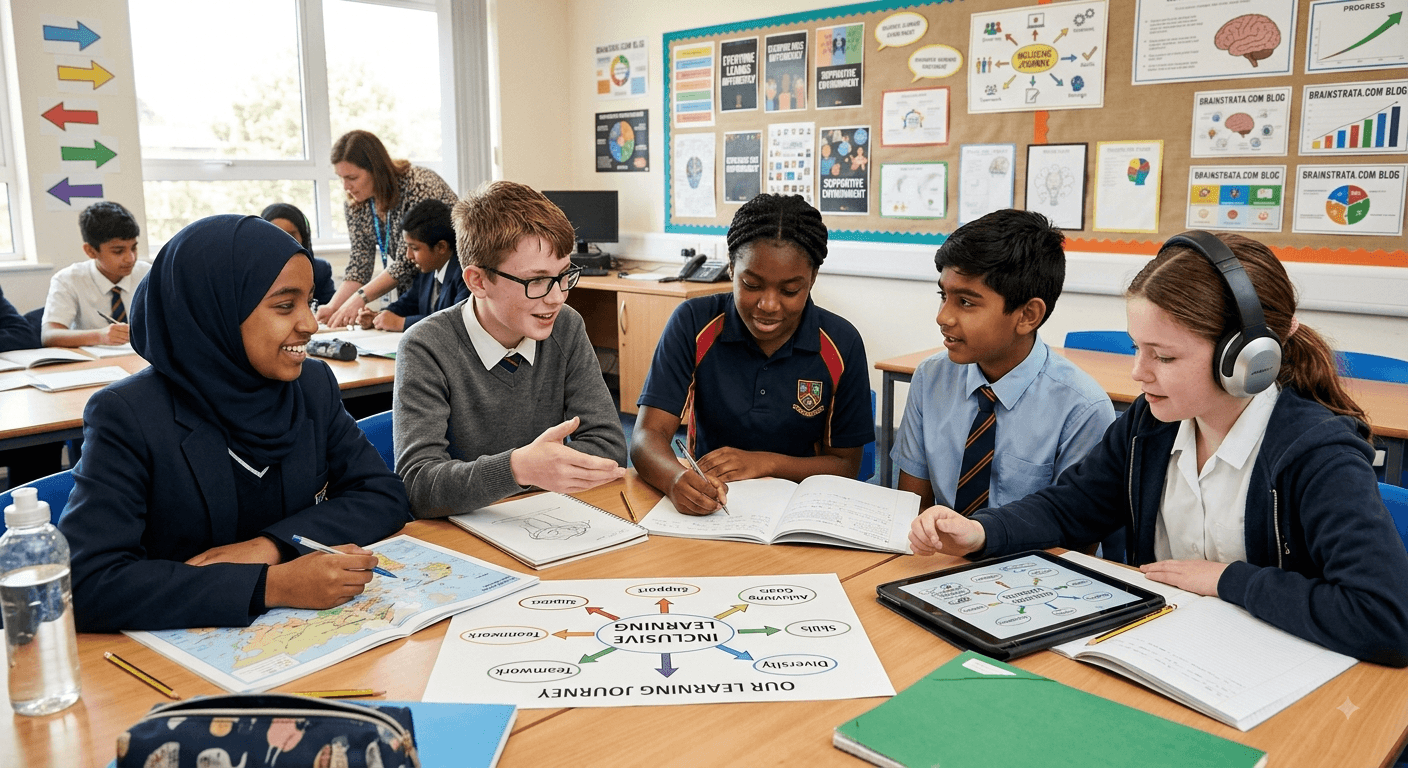
By the time a disadvantaged pupil in England sits their GCSEs, they are, on average, 19.0 months behind their peers. That figure, from the Education Policy Institute's 2026 Annual Report, is the joint-widest gap recorded since the series began in 2013, and a full month wider than before the pandemic. The gap starts early and compounds: 10.0 months behind by the end of primary school, and 4.9 months behind at age five, the widest recorded since 2014.
What makes this more urgent than a slow, steady problem is a finding published by the EPI and the Education Endowment Foundation in June 2026: 44% of the entire GCSE attainment gap already exists by age 11. Nearly half of the outcome that shows up on a results day in Year 11 was already determined by the end of primary school. This reframes where effort has the most leverage, and it also means no single actor, a school, a parent, or a piece of technology, can close this gap acting alone.
Why the gap is widening, not just persisting
Two structural forces are doing most of the work here. The first is absence. EPI's analysis found that if disadvantaged pupils attended school at the same rate as their peers, the GCSE gap would narrow by more than four months on its own, making attendance one of the single largest levers available and one that costs nothing to pull beyond the effort of actually closing it.
The second is geography, and the scale of regional variation is larger than most people expect. London's disadvantage gap sits at 10.2 months, by far the narrowest in the country and the only region where the gap has shrunk since 2019. The South East, by contrast, sits at 22.1 months, and the East Midlands at 21.7. At local authority level the spread is even starker: Newham's gap is 3.9 months; West Berkshire's is 25.7 months, six times wider, in the same country, under the same national curriculum and funding formula. Whatever London is doing differently, structurally, in school admissions, in the concentration of experienced teachers, in the density of support services, is not yet understood well enough to be replicated at scale, but it demonstrates the gap is not fixed or inevitable.
What schools can do
The EEF's Teaching and Learning Toolkit and pupil premium guidance point toward a specific hierarchy, and it is not primarily about new programmes. The Toolkit's own recommended tiered model is high-quality teaching first, targeted academic support second, and wider strategies (attendance, behaviour, family support) third, in that order of priority, because whole-class teaching quality has consistently the largest reach and the best cost-per-pupil-month of progress of any lever available to a school.
Prioritise attendance as an attainment strategy, not a separate pastoral issue. Given that matching attendance rates alone would close over four months of the GCSE gap, treating persistent absence among disadvantaged pupils as a core attainment intervention, not a discipline or welfare matter handled elsewhere, is one of the highest-leverage moves a school can make.
Intervene early, and treat KS1-2 as decisive, not preparatory. With 44% of the eventual GCSE gap present by age 11, a secondary school inheriting a wide gap at Year 7 is working with a headwind that primary-phase intervention had a much better chance of preventing. For secondary schools, this means early, well-diagnosed catch-up in Year 7 matters disproportionately, before gaps that are already two or three years old become five.
Watch for the peer effect inside your own intake. EPI's research found that disadvantaged pupils fall further behind specifically when they attend schools with lower-attaining overall intakes, an effect worth over a month on the GCSE gap on its own. This is a structural, admissions-level issue as much as a classroom one, but within a school's control, it argues for resisting any informal streaming or grouping practice that concentrates disadvantaged pupils together long-term, a caution the EEF's own SEND guidance raises in a related context.
What parents can do
The EEF's Teaching and Learning Toolkit rates parental engagement at an average of four months' additional progress over a year, a genuinely substantial effect for something that costs a school very little to encourage. But the evidence here comes with an important caveat that's often left out of how this statistic gets used: it is measurably harder to engage parents from disadvantaged backgrounds specifically, often because of their own less positive experiences of school, time pressure, or simply not having been offered a clear, concrete way in.
This matters because it reframes where the responsibility for parental engagement actually sits. It is easy, and unhelpful, to read a statistic like ‘parental engagement adds four months’ as an implicit judgement on parents who engage less. The more accurate reading, and the one the EEF's own guidance takes, is that schools and tools need to design engagement that meets parents where they are, rather than assuming a level of time, confidence or positive school memories that not every parent has.
Specific, concrete engagement beats general encouragement. The EEF's evidence points toward practical, specific strategies, a short reading routine, a clear weekly check-in on one subject, rather than vague encouragement to ‘be more involved.’ Parents don't need to become a second teacher. They need one or two concrete, low-effort actions that fit around an already full week.
Expectations matter as much as involvement. Research reviewed alongside the EEF's toolkit found that parental expectations specifically, rather than attendance at school events or general involvement, tend to have a stronger relationship with outcomes. A parent who consistently communicates that they believe their child can succeed is doing something the evidence values highly, even without attending every parents' evening.
Ask the school what's actually needed, rather than guessing. Because effective parental engagement is specific rather than generic, a short conversation with a form tutor or head of year about what would genuinely help, rather than a general resolution to ‘do more,’ tends to produce something more useful for both the parent and the child.
What technology can, and can't, do
This is the section where it would be easiest for a company like BrainStrata to overstate the case, and the honest answer is more complicated than a simple pitch. A 2025 EEF-commissioned systematic review found that the effect of EdTech interventions on disadvantaged pupils specifically is smaller and less certain than the average effect across all pupils, and the review's own conclusion is direct: without careful implementation, EdTech risks widening the attainment gap rather than narrowing it.
This isn't a reason to dismiss technology's role. It's a reason to be specific about the conditions under which it actually helps, because the same review identified real, positive mechanisms when those conditions are met. Adaptive pacing that meets a pupil where they actually are, rather than where a fixed curriculum assumes, was identified as a mechanism associated with improved outcomes. So was scaffolding for collaborative learning, and structured practice that gives pupils and teachers a clear, current picture of where a specific gap sits, rather than waiting for an end-of-term test to reveal it.
The conditions that turn EdTech from a gap-widener into a gap-narrower, drawn from the EEF's review and earlier evidence from Higgins et al., are consistent: technology needs to be embedded inside strong, existing pedagogy rather than used as a substitute for it; it needs to actively address the access barriers, device availability, connectivity, quiet space at home, that disadvantaged pupils are statistically more likely to face; and it needs to be something a teacher can see into and act on, not a closed system operating independently of the classroom.
The honest summary: Technology is not a neutral, automatically-good addition to a disadvantaged pupil's education. It is a tool that measurably helps when it's adaptive, teacher-visible, and designed around real access barriers, and can just as measurably widen the gap when it isn't. Any platform, including BrainStrata's, should be evaluated against that specific bar, not against the much lower bar of simply being digital. |
Why this requires all three, working together
None of the three levers above is sufficient alone, and the evidence explains why fairly directly. Strong teaching without parental engagement leaves the roughly two-thirds of a child's waking hours spent outside school untouched. Parental engagement without strong teaching asks parents to substitute for provision that should be happening in the classroom. And technology, absent the first two, is exactly the scenario the EEF's own research warns can widen rather than close the gap; a tool handed to a pupil with no teacher oversight and no support at home to help them use it well.
The 44% of the gap already locked in by age 11 is the clearest illustration of why timing and coordination matter more than any single intervention. A school, a family, and a piece of adaptive technology all pulling in the same direction from an early stage compound on each other. The same three elements, acting separately or starting late, are each fighting a gap that's already partly set. This is the coordination BrainStrata is built to support: adaptive practice that gives teachers a clear, current view of where a pupil's gaps actually are, built around low-effort, specific parent engagement rather than assuming time parents don't have, and designed from the outset around the access and implementation conditions the evidence says actually determine whether technology helps or hurts.
Sources and further reading
[1] Education Policy Institute. Annual Report 2026: Local Authority Gaps and Regional Gaps. GCSE disadvantage gap of 19.0 months in 2025, the joint-widest since 2013; primary gap of 10.0 months; age-5 gap of 4.9 months.
[2] Hunt, E., Perrott, M., Jiménez, E., & Robinson, D. (2026). Growing Apart: The Evolution of the Disadvantage Gap. Education Policy Institute, co-published with the Education Endowment Foundation, June 2026. Finding that 44% of the GCSE disadvantage gap exists by age 11.
[3] Education Policy Institute. Breaking Down the Gap (2025). Findings on the peer effect of school intake composition and its contribution to the GCSE disadvantage gap.
[4] Education Endowment Foundation. Understanding Quality Characteristics of EdTech Interventions and Implementation for Disadvantaged Pupils: Systematic Review with Meta-Analysis (July 2025). Findings on the smaller, less certain effect of EdTech for disadvantaged pupils and the conditions associated with positive impact.
[5] Education Endowment Foundation. Teaching and Learning Toolkit: Parental Engagement (updated guidance). Average impact of +4 months' additional progress.
[6] Education Endowment Foundation. Working with Parents to Support Children's Learning (guidance report). Recommendations on specific, low-effort parental engagement strategies and the particular challenge of engaging disadvantaged families.
[7] Education Endowment Foundation. Teaching and Learning Toolkit: overview and tiered pupil premium guidance (high-quality teaching, targeted academic support, wider strategies).
Frequently asked questions
The Education Policy Institute measures the disadvantage gap in months of learning: the estimated gap in academic progress between disadvantaged pupils (typically defined by free school meal eligibility) and their peers, expressed as how many months behind, on average, disadvantaged pupils are at a given stage. By GCSE in 2025, this stood at 19.0 months, the joint-widest since the measure began in 2013. This months-based measure is used because it's more intuitive than raw grade differences and allows comparison across key stages, subjects and years on a consistent scale.
Ready to boost your GCSE results?
Join thousands of students using BrainStrata's AI-powered personalised learning to master their KS3 and KS4 curriculum.
.png)